About Me

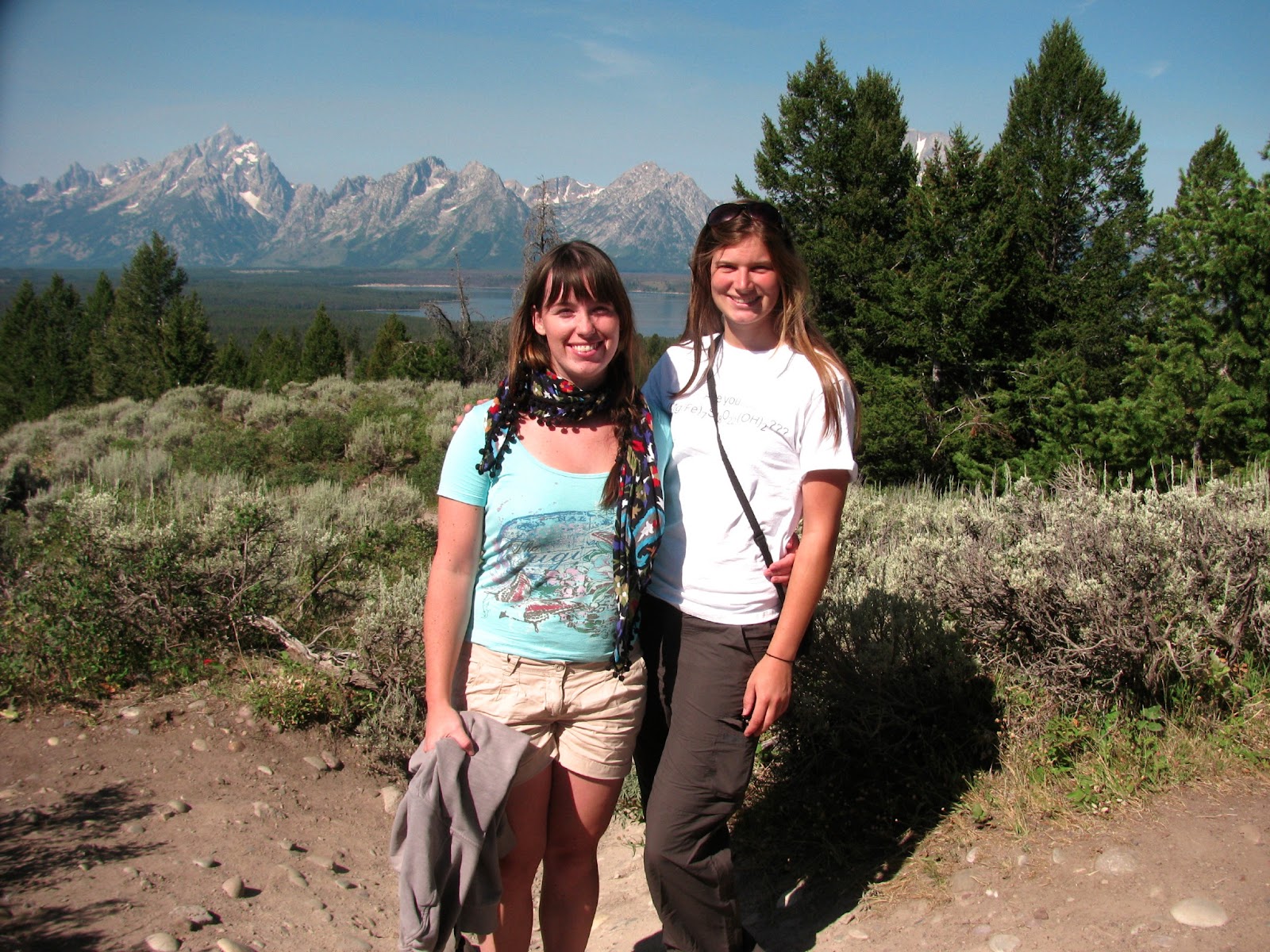
My photo
I started a PhD in aquatic geochemistry at the University of Iceland working on the CarbFix Project. I had graduated with a Masters from Utrecht University (Netherlands) where I studied Hydrology and Geochemistry and from George Washington University with degrees in Geological Science and Environmental Studies.
Showing posts with label university. Show all posts

Thursday, July 17, 2014

What exactly did I come to Iceland for? Besides the scenery...

As many have asked about how my PhD is going thus far, here is a summary of the project (as it stands now) and a status update:

Last fall I applied for a position under the title: Does CO2 injection cause toxic metal plumes? The description roughly fit my background so I applied on a whim and very happily was accepted! Paperwork to move to Iceland took about 3 months, but soon enough came my arrival to Reykjavik. 

Bought a used jeep - really need 4WD for all the off-roading (and bad roads), Photo by Becca Neely
 As with any new position, things started off slowly and it took awhile to get settled in (like setting up a bank account and buying a car). I was immediately given a desk in an office for 3 people, though for the moment have it all to myself and have bought some plants to keep me company.

Plants to fill up my large desk

Askja  in March - Earth Science building I work in
There is quite an active graduate student population here, with associations for the geoscientists and biologists organizing events throughout the school year. At least 1/2 of the graduates are actually foreign...well European, but then again many of those are German-speaking or from the UK/English-speaking. There are also quite a number of lectures during the week of a variety of topics from those at the university and those visiting. Every Friday, except during the summer, is "Friday Lunch" at 11:30. This is quite anticipated as the graduate students, professors and researchers rotate to bring a lovely lunch to fill the meeting room table up with bread, fruits, cake, spreads, juice and so on. In addition, on most Wednesdays, my supervisor and his PhD/Post-Doc students - aka the Bambi group - meet and chat over lunch. Those of us situated at the university are actually all female, with one male having just received his PhD in May and the other living in northern Iceland working on his papers.

My rather large lab space
Anyways, the main focus of my PhD research right now is a 2.3 meter high pressure column flow reactor, where I am to simulate CO2 injection into basalt and assess the risk of toxic metal mobility. The previous PhD student, who is now a Post-Doc, had designed the setup and completed some experiments, and then took it apart this past December. She has since been teaching me the ins and outs of the column experiment, cleaning it, putting the pieces back together and testing all the parts out in order to get some more experiments up and running again.

Column when taken apart
The column itself is composed of 7 titanium compartments each with their own sampling port. There are two additional caps with ports as well for the inlet and outlet tubes. The idea is that two pumps are connected to a mixing chamber where CO2 and H2O are mixed together at certain flow rates, then this mixture enters the column from the bottom and flows upward (reason being to remove any preferential flow due to gravity) interacting with the basalt.


Mixing chamber and piston pump

Then it gets all confusing...as there are the 7 sampling tubes from each compartment which are connected to a main sampling device in addition to the outlet tube. These tubings and sampling device are also connected to 2 back pressure gauges to insure that a high pressure is maintained throughout the column. I am still unsure of the whole sampling device setup, hopefully when I put it back together I will understand it more! 

Column put together with all tubings, back pressure gauges within the wooden box on the left

Closer look at the compartment sampling ports each with their own filters and valves, on the left is where I am just all confused, still to learn this aspect of sampling from the column!
Never used syringe pump
One big difference between the old experimental setup and the new setup will actually be the use of a syringe pump (instead of a piston pump) for CO2 that is more precise and also allows for a lower flow rate. This will result in a longer residence time for the CO2-H2O mixture in the column when flowing from the bottom to the top...before it was 8 hours, now we are hoping for 1 month.

As the column is now together and water pumped in (the volume of the column is about 4.5 L), I am now checking for leaks under high pressure and double checking the flow rate of the H2O piston pump so that I will have a nice flow rate ratio with the new syringe pump, which also still needs to be tried out and tested (never been used yet, eek!).

Gold-coated basaltic glass samples for the SEM
Meanwhile...I have been looking at the basalt that used to be in the column and got some preliminary insight using an SEM (scanning electron microscope) at the university, this microscope helps to produce images of the surface of individual particles so I can assess whether there has been alterations after interacting with CO2-charged waters. I am now preparing to use the SEM again (albeit a different one at another institute) to get a better idea of the chemical composition of the basalt. The results will be presented at a conference our university is holding next month, which I am quite looking forward to - also as it will be my first "science" conference ^_^
Agate disk mill
 
Besides the SEM work, I am continuously trying to prepare new material for the next set of column experiments. The material is basaltic glass that was sampled from a mountain near the Blue Lagoon. It is crushed, ground and sieved to the right particle size and then finally cleaned of the ultra-fine particles. Currently I am making use of an agate disk mill, think of it as a machine-run mortar and pestle. Unfortunately, as it is quite old (main parts from 1969), its belt has broken and we keep temporarily fixing it with rubber rings that just stretch when too warm from continuous use. As it is summer and lots of people are off on holiday, a more lasting solution will not be found until August/September. Despite this, I am slowly but surely grinding and sieving in order to obtain 8 kg of material.


Bucket on right to be completely grinded, correct particle size sieved into bucket on left (eventually filled...), bucket in middle will be re-sieved and re-grinded
Lastly, in the background of all the other background work to the column, I am using a geochemical modelling program called PHREEQC to model the column experiments and its parameters. This will allow me to get a general overview of the reactions that I would expect to occur before running the actual experiment. Right now I am double-checking all the parameters used for previous model runs and then will run the model again in preparation for the new experiments.

Hm... anything else besides this...well trips around Iceland of course!!! But that shall have to wait, so sit tight and my next post shall be about my trips to places like West Fjords, the Golden Circle and Snaefellsnes peninsula! This weekend I shall actually be off on another trip to see these famous East Fjords everyone here keeps going on about :P

Hiking up Vifilfell, 30 min drive from Reykjavik, Photo by Mona Dragosics

Monday, August 19, 2013

End of a Chapter

Masters Hydrogeology Office, Photo by Liza Bourchtein.
Back in Utrecht here! Was just thinking how crazy that two years have flown by and come 24 September I will have a master's degree in my hand. All my grades are in and approved and next week I have an appointment with Immigration for a new Dutch visa since I am no longer studying, ack! 

Side note: Here is a link to my masters thesis in case anyone wanted to read or just skim through it. It is by no means perfect (always room for improvement in terms of analysis), but I learned so much this past year about planning, fieldwork, lab analysis, writing and just science research in general.

Alright, having just been back in the US and Canada, many of my friends and family have asked me what my plans are, so here it goes for anyone else interested:

I am planning to stay in the Netherlands while job searching (water/hydrology/geology/geochemistry fields) until at least the winter holiday season. Plus my internship at Deltares got extended for another month to the end of September. For jobs I am searching in the following countries: the Netherlands, Germany, Austria, Switzerland, Canada, United Kingdom, Australia, New Zealand and the United States. There is a bit of a range for choice but I figure this is the best time to take a chance and see what is out there. Plus I do not want to limit myself and not take advantage of obtaining experience from the best opportunities. At least I know I don't need visas for the US and Canada, whew. 

Spanish Banks Beach Park looking towards Vancouver
Now if nothing comes up, then I plan to head back to New Jersey, pack up my car and drive on out to British Columbia, get a waitress job or something in Vancouver area and continue on my job search! Not that I don't love New Jersey, which is honestly a wonderful state to be from and live in (to all you haters!), but I want to try living in a province that I really only love more and more each time I have been there from when I was really young taking the BC ferry to Victoria to see my grandparents (and totally freaking out when the horn blew), celebrating Canada Day with family along the river in Kelowna when I was 10, to discovering interior BC and the Cariboo Mountains while collecting samples last fall for my thesis. There is so much I still want to discover there and never have enough time to do, like going to the Queen Charlotte Islands, continue driving north up Highway 97 to the Yukon and Alaska and kayaking besides wild orcas along the coast. So yeah...tentative plans, but who knows, everything could always all go down the drain and I will come up with something else that is just as grand instead!

--

To now backtrack to talk about the past as opposed to the future - my trip back to the US/Canada was really wonderful and a much-needed break from all the thesis and internship report writing and conducting groundwater experiments. Definitely needed that breather. There were a number of reasons for the timing of my trip back, some of which included celebrating my mother's 60th birthday, a sea burial for my Oma and Opa, meeting my dad out and seeing the BC branch of his family (remind me I should draw out a family tree for you all, I think I have it down now...), and getting to view firsthand how my mom's new house is coming along!

SeaWorld Dolphin Interaction, CA
Oceanside Harbor, CA
While the weather really was not the best in Encinitas this time around, it was good to see my cousins, aunt and uncle again on top of my mom and sister. My aunt put together a lovely birthday surprise for my mom where she, Gillian and I got to swim with a dolphin at SeaWorld! The dolphin we interacted with was a 25 year old dominant female with a bit of a silly side to her personality. We also had a very nice sea burial ceremony for my mother's parents, both of whom passed away while I was studying the past two years in the Netherlands. It was a gorgeous evening, we left the harbor and saw a rainbow and it was nice to be out on the water as my first memories of them are of playing in their pool or at the beach in Florida!

Deep Cove, North Vancouver, BC
The next stop was North Vancouver where Gillian and I stayed with my Aunt Lynell (my dad's youngest sibling and only sister) and her family. She hosted one evening a nice dinner where my Uncle Warren (my dad's younger brother) and his wife came out from ...well I forget where they live now since they sold their last place, oops! My aunt also has a new dog named Kyla, a 6 month old female who really is adorable! Haha. As a surprise, it turned out my Aunt Marilyn (wife of my dad's oldest brother Roy) and their daughter Courtney were passing through with their 3 Samoyeds and 2 puppies that one had just had. So it was nice to catch up with everyone!

Wells, BC
Those days there we spent visiting the University of BC campus (got to keep PhD in mind!), going sea kayaking (well more like bay), going downtown, and taking a hike along Deep Cove. I then left to head up to interior BC and thus parted with my sister as I will not see her again until at least October. I flew up to north to Prince George, rented a car and headed on down to Wells (in Cariboo mountains more north of where I was last year in Likely/Horsefly) with a good friend for a music festival, which was unlike all the other music festivals/concerts I had been to earlier this summer. Some of the artists I ended up really liking were: Samson's Delilah (husband and wife from Robson, BC), Corin Raymond (man from Ontario) and Tanya Tagaq (contemporary Inuit throat singer). 

This is Corin Raymond singing "Don't Spend it Honey" written about saving and spending Canadian Tire "money" (for non-Canadians - think coupons in the form of bills but only very small denominations that people tend to save for years). He was actually able to pay for all the costs of his album with this money that people sent him. (Skip to 1:39 if you want to listen to the song).

He also did an autobiographical play called "Bookworm" and if you love books and reading, definitely find an hour of your time and watch it HERE.

This is a live improv performance of Tanya Tagaq - just to warn you, if you have never heard throat singing before it is quite different and this is by no means the traditional way as it was normally a vocal exercise between two Inuit women and Tanya takes things to a whole different level. It was amazing listening to and watching her though, she had performed with a violinist and a harpist and imitates many different sounds and emotions, i.e. howling like a wolf (go to 4:26 in this video).

The ArtsWells festival was amazing, and I loved being able to look up at the stars and wake up in the morning, taking a dip in the nearby river, and spend the day volunteering my time and listening to some wonderful musicians. Upon arriving back to Prince George, I got the chance to finally see the University of Northern BC campus and say hello to the two Canadian professors who were able to help fund the fieldwork I did last year for my masters thesis. In a way it brought everything full circle as I had finished the thesis a few weeks earlier and was in the Cariboo region when one year early I had driven out there to start the whole process! What a year! The campus was small but actually quite charming and I have only been hearing and reading good things about the university so was glad to have the opportunity to walk around and explore a bit (again...PhD?? My mind is always buzzing with ideas.)

QRTT Photo Op!
After a 1.5 day process of getting back to Vancouver (took a 13 hr Greyhound and slept for the first time at an airport), I started my journey back east with a small stop in New Jersey. I was able to see both of my parents again, tour around the basically finished with renovated house of my mom's and catch up with my hometown friends! This included another QRTT dinner (QRTT standing for quartet, aka my 3 good girl friends and I) and photo op. :P They also got to shop around all my old stuff as I was trying really hard to recycle donate and get rid of my things I had accumulated over the years. Books though are hard for me to part with, apparently my mom and sister filled a whole car of them to take to storage (mind you there is a good bunch that are science textbooks).

--

Well I suppose this will be my last post as a masters student as I will be officially no longer a university student come end of August! Scary...makes me feel older, also knowing that when I go back to New Jersey, it will not be to my childhood home! I will still continue to blog about my travels as I haven't left Europe yet and there is still so much to see and do besides...internship, jobs, Irish dance classes, and any other projects/activities I land myself in :P TTFN!


Thursday, February 28, 2013

Update on University + Bonus Video Clips

Today was the day my thesis was suppose to be done...obviously I asked for an extension, for several reasons:
(1) Started a bit late with the labwork, had wanted to do it last November/December, but as I needed some supervision, did not begin until January.
(2) Received results from the ICP-AES (measured heavy metal concentrations) a few weeks ago, and wow that was a lot to sift through and make preliminary graphs from!
(3) Freaked out because the concentrations from the sequential extraction procedure were just way too low compared to the total concentrations. Finally realised why Tuesday as they were not calculated with the correct dilution factor. Whew, crisis averted, but now have to wait for those new results, re-organised, and make all new graphs.
(4) I have a lot to write! (story of every thesis-writing student's life)

The plan is to finish my thesis within the month of March (of course there will be a blog devoted to that once it is finished!). This would be done in time for me to start my internship at Deltares by April 1, which is an applied research institute in the field of water, subsurface and infrastructure. They mainly focus on deltas (hence the name), coastal regions and river basins. They have offices in Delft and Utrecht; Utrecht's offices are conveniently on De Uithof (the university's campus) and I will be conveniently working there within the Soil and Groundwater Systems unit.

The internship should last 4-5 months, so until the end of August, which is when my two year masters program here in the Netherlands would be complete. I will be working with a PhD student, who has been in the workforce for awhile and decided to take the opportunity to obtain his doctorate degree this past year. He is looking at the hydrological and biogeochemical controls on phosphorus retention in lowland catchments. Phosphorus if you didn't know is a widely used fertilizer in the agriculture, which is definitely prevalent in the Dutch landscape. There is a high demand for phosphorus, but the supply is dwindling, therefore its retention is of particular interest to many and also to ensure minimal surface and groundwater pollution. 

As long as the Exam Committee at the university approves of my internship, I will be looking at mechanisms of phosphate immobilization during the exfiltration of anaerobic groundwater...basically I'll sample groundwater that is not exposed to oxygen (anaerobic) from two locations in the Netherlands, (1) calcium-rich brackish groundwater and (2) iron-rich groundwater, both with high phosphate concentrations. These samples will be brought to the lab so I can set up aeration experiments varying parameters like oxygen levels, temperature and pH while noting the effects on the formation of Fe and Ca minerals.

After those experiments, I will then need to write up a report about the results, hand it in, graduate and then...(scary part)...find a job! If you guys didn't already know, I plan to look here in the Netherlands, United Kingdom and Germany, Canada, and the United States. Keeping things super open because I am not tied down to anything/anyone and looking forward to gaining new experiences/perspectives. Not sure what type of job I am looking as one would think with a masters you would have a better idea, wrong! I do like surface water (think rivers, lakes, estuaries) and soil/water quality, so guess I shall go from there (of course anything to do with water I like...but that entails quite a lot).

Well now that I got that off my chest and this post is all words and no pictures...here are some lovely short video clips for you to watch:

Used a centrifuge to collect some resuspended sediment from the Horsefly River, but in order to do this we had to kick up the sediment to create plume in front of the pump resulting in a weird dance...and yes I know I look really ridiculous, but that is what we would do for 15-20 minutes at a time.


Marjolein and I made several sampling trips to the Horsefly River and often were accompanied by a research assistant, Ben. We asked him to take a photo and I guess he took a short video instead...

 
Last September when I was in Alberta for Labour Day weekend, we had 14 people and 7 dogs and stayed at my uncle's place along Cowboy Trail with a view of the Canadian Rockies.

 
Driving back from Banff through the Kananaskis part of the Canadian Rockies to my uncle's place.

Drive from Calgary south to my uncle's place, gorgeous view of the mountain range as you drive through farmland. Definitely one of my top favourite views (sorry for all the wind noise).

Tuesday, February 12, 2013

A whirlwind of 10 months

Well it's been since last April that I did a post and to be honest, I had lots of time available just never could get my thoughts together and feel motivated enough. Here's then to a big update on what has been going on with my life from last spring to this winter.  

Icefields Parkway, Alberta, Canada
Karneval, Eindhove, Netherlands
After determining my masters research, I could focus on finishing up quarters 3 and 4, where I co-wrote a lengthy paper on the "State of Estuaries" (quite depressing sadly), walked around and fell in mudflats, visited Shell's headquarters and lots of coffee breaks during lectures

After my trip to Istanbul in February, I visited Germany twice to go to Berlin and Hamburg (love the Eurail pass!), went to Karneval in Eindhoven, and London for St. Patrick's Day, the famous Keukenhof (think lots of tulips and hyacinths) in Lisse on Easter weekend, and Queen's Night in Utrecht. Come May, I went to a Liberation Day festival with a good friend and her boyfriend (May 5) that was lots of fun  - beers/whiskey-colas, eating Döners and listening to Pearl Jam covers while WWII airplanes flyover.

Now comes my whirlwind where I basically live out of a suitcase from end of May - mid November. Ready? :P

Bodrum, Turkey
We had a long weekend in March so met up with a college friend in Dresden and Berlin since she was visiting family in Poland. Dresden was such a chill city and there happened to be International Dixieland Festival during that time so was able to relax on some steps with a beer in hand, listen to the bands and take in the scene. The city did a wonderful job rebuilding post-war.


Fieldwork in Brest, France
June, when I think of that month I do not remember where I honestly got my energy. It went something like: weekend in Paris, 4 full days of class, weekend to Bodrum, Turkey to meet up with NJ friends, have 4 hours to unpack and go on vans down to Brest, France (Brittany) for a 2 week fieldtrip for my Field Geochemistry class. Our days filled with eating baquettes at 6:30 am, full day out in the field or working in the lab, make dinner, talk about what we did, play volleyball/swim in the ocean/play Bang! and go to bed around midnight. Then work hard on a report and making lots of Excel graphs, jetset to Rome for a weekend and try out couchsurfing (definitely recommend), pack everything up and leave for North America on July 4.
Rome, Italy

Southern California
Needless to say, at the end of Independence Day weekend where I was back in New Jersey, I was so devoid of energy and jetlagged I ended up sleeping pretty much 24-30 hours straight. It was a fun weekend of course with catching up with all of my NJ friends, going down the shore, and just being able to sleep in my bed.

So July consisted of me driving down to Washington, DC to visit college friends, go into NYC at least once, experience a massive thunderstorm in downtown Manhatten (it was glorious) and fly off to California for a week to see my mom's side of the family. It was nice to see my Opa after a year since while I had been away in Utrecht my Oma had unfortunately passed away. 
New Jersey, Photo courtesy of Cleo Chou

Now the real fun begins! Fly back to NJ, next day pack for 3 months and pick up my Dutch fieldwork partner, sleep and set off by 10 am heading due west! So if you want to see the massive 13,000 miles (21,000 km) trip we did, look at Tripcolor, which is a cool app I found that would track your iPhone photos and plot them on a map. Anyways, it was awesome driving and being able to see family, Yellowstone, Grand Tetons, Rockies, Oregon & California coasts and the Grand Canyon.
Wyoming

Two highlights of the roadtrip itself would have to be:
(1) Getting up early in the morning to drive to Lamar Valley and watch the wolves and being able to listen them howl in unison. It is one of the purest sounds you can hear and fulfilled a childhood fantasy of mine.
(2) Watching the sunset into the Pacific Ocean while in southern California and then swimming in the ocean right after because it was so warm. Ah, I really do miss the salty sea air, the crash of the waves and the feeling of the sand beneath you. 
Grand Teton National Park

Horseback Riding in Cariboo Mountains


In Canada itself, I was able to see the vast majority of my dad's side of the family in Alberta and Vancouver, which was wonderful. Of course the main objective of the trip was to collect sediment samples in the Cariboo mountain region of interior British Columbia. It was wonderful living out there for 2 months and take a step back from the business of life that I had known from growing up in NJ and going to school in Washington, DC and Utrecht. 

Swimming in Quesnel Lake
 Some highlights of being in Likely, British Columbia would include:
(1) camping next to a river and abandoned mine town
(2) seeing bears every week driving to and fro our sample sites
(3) hanging out at the local (and only) pub and playing pool listening to a old jukebox
(4) horseback riding for the first time and seeing the most breathtaking view
(5) driving really into the woods to a lake to just take the afternoon to relax and enjoy nature

Ghost Lake, Photo courtesy of Ben Anderson Millington

Big Sur, California
Needless to say I was quite sad to leave because of the above and enjoying the group of people I had met there. Had a fun time driving back to NJ via the West Coast and stayed there for another two weeks before flying back to Europe. Spent a fun weekend in Manhatten and in Jersey City catching up with friends, before my last week made more interesting by the landfall of Hurricane Sandy and the subsequent loss of power and gas shortages. 


Family Vacation to Jamaica
 
Coming back to Utrecht, I was without a room as it was impossible to search for a room back in the spring/summer (remember my crazy June??). But during my first week back found a temporary room for two months and go off to Stockholm for a quick weekend before starting up another class I decided to take. During this time I was figuring out labwork for my Canadian sediment samples, but was still able to go Aachen for another fun-filled weekend of visiting the Weihnachtsmarkt and drinking Glühwein. Then before I knew it, it was holiday break where I went to: Germany for Christmas, Jamaica during the week, one night in Utrecht for New Year's Eve, and England/Wales for the first week of January. (At the end of this, I did realise that jetlag and I are really terrible friends and I should refrain from such intensive traveling across timezones in short intervals..attempt to at least :P)

Austrian Alps


End of January comes, my labwork finished, the last final taken, I move into a new room and leave promptly on a night train to the Austrian Alps for a week of skiing with Contiki. For years now I have wanted to go back into skiing since I gone for two winters during high school and had enjoyed myself. Things always seemed to get in the way though, like living where there weren't "real" winters, university classes, waitressing my butt off for a year and traveling elsewhere. Well, 8 years went and enough was enough, it was time to bite the bullet and do something. I ended up taking 5 days of lessons with an awesome Austrian ski instructor (who would ski to and from work since he lived on the slopes) and hanging out with mostly Australians (had no idea that Contiki was such a big Aussie thing). Definitely was sad on the train ride back up north to leave all the snow and mountains.
View towards Hopfgarten, Austria
That should bring me up to speed to the current date where my main focus is thesis writing and also obtaining furniture. Also setting up my internship with Deltares, details to come later!

Wednesday, March 21, 2012

A once in a lifetime opportunity!

This will be an out of the ordinary post and I know I still need to post about my trips to Istanbul, Germany and London...but that will have to wait since I am so excited about my masters' research!!!

Pretty much a bunch of us here at Utrecht University were freaking out about what to do for our masters' thesis or research next year in general.  We had heard rumours of a list that was suppose to be emailed out of a research opportunities with various professors.  Luckily my friend, Matthew, found it online and slowly this list trickled out to the rest of us (finally being emailed out last Friday after we told a professor).  As I was scanning this list I noticed the following project:

The UNBC Quesnel River Research Centre is located on the Quesnel River in the foothills of the Cariboo Mountains. It is surrounded by lakes, rivers, and streams that act as linkages to the various landscapes in the area. This project will use remote sediment sampling traps to collect samples of suspended sediment from several tributaries in the Quesnel watershed with different land use activities. Samples will also be collected from reference sites and from the main stem of the Quesnel River. Samples of channel bed sediment will also be collected from these sites. The aim is to determine the effect of land use activities on sediment geochemistry in the Quesnel watershed. 

Prof. Marcel van der Perk with two Utrecht University students
The name of this project is "effect of land-used activities on sediment-associated geochemistry in the Quesnel catchment."  Basically this would combine my background in Geology with my current focus on Hydrology.  I am taking two Geochemistry courses the next quarter so that should help and since I am interested anyways in the effect of anthropogenic activities, all in all it sounded like a good project.  Plus, I had been potentially interested in doing a project or a job up in Canada.

So...I met with the professor in charge, Prof. Marcel van der Perk, this past Monday to talk about the project and everything involved.  He has connections with the University of Northern British Columbia, who run a centre called the Quesnel River Research Centre, and it would be the third time students from Utrecht University would be going out to do research in the area (it started about 5 years ago).   I would be working on this project with a fellow student from the Netherlands who is also a Hydrology Masters student.  Together we would collect the samples from various locations in the Quesnel River catchment, often in remote locations.  Then prepare them and send them off to be analysed, which would take about 4 weeks or so.  The data collection would be done over a period of 8 weeks more or less during late summer/early fall. And afterwards we would return to Utrecht to write our master thesis based on the data collected.

Quesnel River Research Centre
There are actually a lot of things that need to be done in preparation for the trip out there.  We need to apply for funding as currently there is nothing set aside for this, though potentially UNBC might have some available.  I am kind of nervous about that as I have never applied for something like this before, but the professor in charge is willing to write us support letters and recommendations and he gave us a couple suggestions to work off of. The last two students who went were able to get most expenses covered so fingers crossed that we will be just as successful.

The research centre we are staying at is located in a village called Likely, British Columbia - a remnant settlement of the gold rush period - that is on the deepest fjord lake in the world to the west of the Cariboo Mountains.  The nearest large town is Williams Lake, a 1-2 hour drive away.  Vancouver is a 9 hour drive and both Calgary and Edmonton in Alberta are 13 hour drives away since you have to pass through the Canadian Rockies.  Up there roads are not straight, but meander along the topography, or even just end and never go further.  Growing up mostly in America, it can be quite strange as one gets quite used to having multiple options of reaching a particular destination, but the farther north and more rural you get in Canada, there really is one road or you have to take a small plane.


Likely, British Columbia
The village has one general store some kms away from the centre so we will need a car up there, also in case we want to drive into Williams Lake for other stores.  The last two students bought a car for two months...and I am hoping that would be our last option.  I talked to my father and he is going to ask my family in Vancouver and Alberta if they have an extra car or know of any good options, but if anything I do have my good reliable 2001 Saturn sedan in New Jersey!  So what does this mean?!? Potential road trip, which would be totally awesome!  It would probably take a good 4-5 days to reach Likely, but I would most likely need to work in a couple days extra in case something happens or if I want to take an afternoon off.  I still of course do not know the details yet, but at least I know I definitely have a car available to get around.  Yeah it would put a lot of miles on my car, but it is over 10 years old and hasn't reached 100,000 miles yet so maybe it is time for it to reach that milestone :P

 Grizzly Bear print
Other things we need to do are to get First Aid certification (I would think preferably Wilderness/Remote as opposed to just normal) and training in how to react to grizzly bears as there are definitely some in the area...I mean this is the middle of nowhere we are talking about.  Also we will need to be flexible in terms of the locations of our samples as we probably will not know of it until we get there.

After discussing with the other student about potential dates we would do fieldwork, it is looking to be around August 6 to October 6.  We decided to try and plan for 9 weeks so we could take a little break in the middle and do some sightseeing or even visit my family (which I really hope happens at some point)!!  Unfortunately this will cut into my time with family and friends in America, but this is honestly an opportunity I cannot pass up.  Plus I might be able to take on a week or two after the fieldwork to be in America before heading back to the Netherlands.

Qusenel Lake with Cariboo Mountains
The centre itself should be comfortable as up to 14 people can stay there in bedrooms for 1 or 2 people and there is a living room/common area.  Supposedly there will be times where it will be filled with people on field trips or have barely anyone and be quite quiet.  I think it will be a good opportunity to meet new people, especially since I expect to meet other students from the University of Northern British Columbia as it is based in Prince George about 3.5 hours drive north of Likely.

To be quite honest, this is a mini-dream come true for me because I have always been interested in living in a rural location and now I have the chance to see if I like it at all.  It will be a nice change of scenery for me having lived in Washington, DC for five years and the Netherlands the past year.  I do like it here, but I really do miss the various types of geography you find in America and Canada, so that should definitely quell some of that homesickness! And it would be nice to potentially contribute to the country I am technically a citizen of, especially since I currently have not been able to be there much.

Anyways, if anyone is interested in a potential road trip in early August from eastern America up to western Canada or in early October back from Canada to New Jersey, let me know! It would definitely help to have another driver or two, plus if you have never see much of the America...honestly you need to, it such a huge country and has so many different sides to it, it is hard to really sometimes define what it is.  Plus, road trips are always fun!


And how can one resist this type of scenery?!?!
Photos courtesy of Quesnel River Research Centre.